
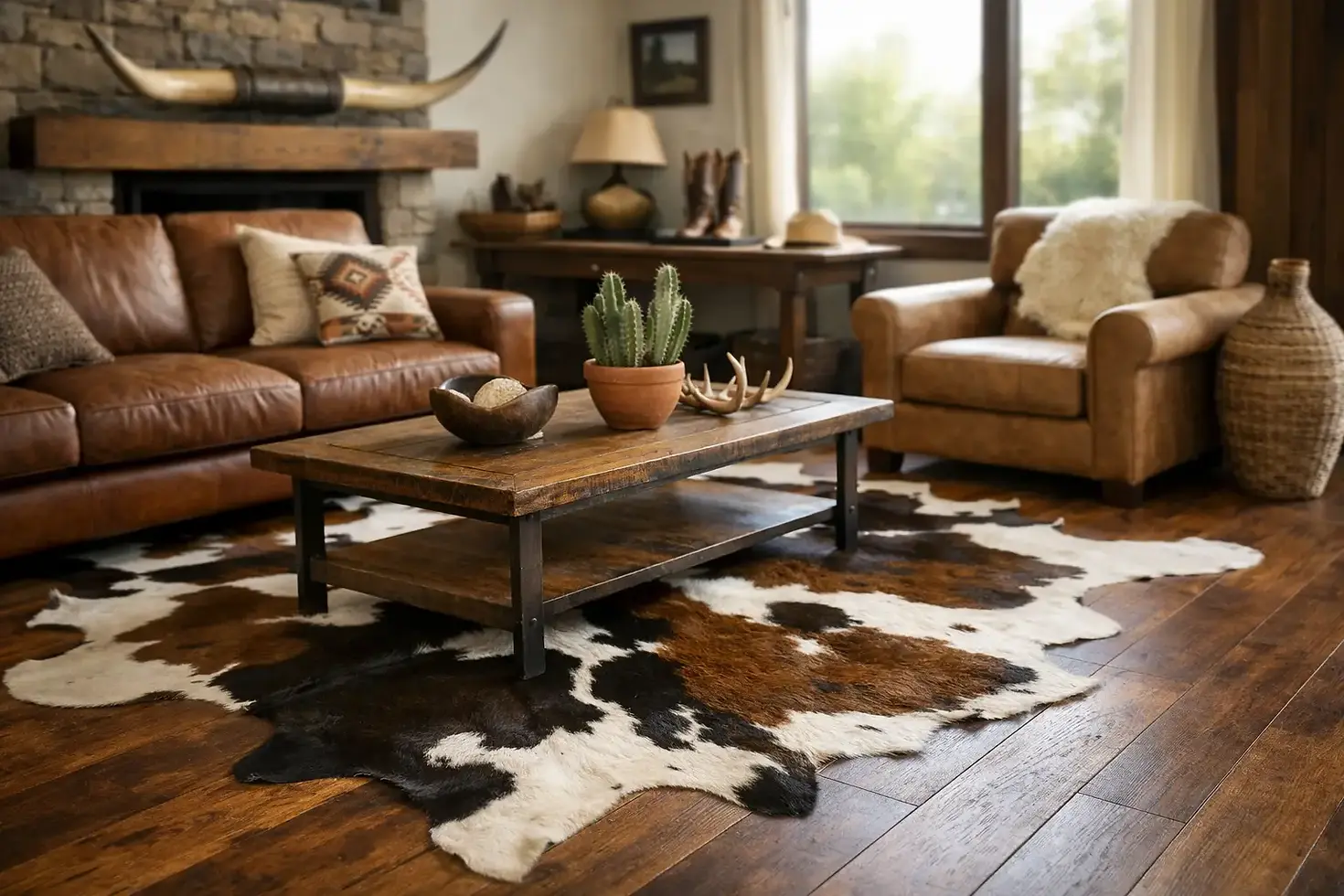
How to Style Cowhide Rugs With Texas Confidence
A cowhide rug does more than cover a floor. It brings natural movement, rich texture, and the kind of character that makes a room feel collected instead of copied. If you are wondering how to style cowhide rugs, start by treating the hide as a statement piece, not an afterthought. Its organic shape, distinct markings, and substantial presence are exactly what give it power.
Whether your home leans ranch-inspired, Southwestern, rustic luxury, modern Western, or clean and contemporary, an authentic cowhide rug can ground the room without making it feel overdone. The right placement and scale matter more than matching every color perfectly.
Start With Scale, Not Color
Cowhide rugs have irregular edges, which makes them feel relaxed and natural. That same shape means you should choose a size based on the furniture grouping, not on the assumption that the rug needs to fill every inch of the room.
In a large living room, a full-size hide works beautifully beneath a coffee table, with the front legs of the sofa and chairs resting on it. This gives the seating area a clear center while allowing the hide's shape to stay visible. If the room is especially spacious, layer the cowhide over a larger neutral woven rug. The bottom layer defines the zone; the cowhide adds the unmistakable finishing touch.
For a smaller room, avoid forcing a large hide wall to wall. Let the natural outline show. A compact or medium hide placed at an angle can make a reading corner, office, or bedroom feel intentional without crowding it.
Color should support the room, but it does not have to match every surface. A black and white hide can sharpen a room with warm leather and walnut wood. Brown, brindle, or speckled cowhide brings depth to stone, cream upholstery, and weathered finishes. A lighter hide can brighten dark floors, while a richly colored hide gives an airy room a stronger foundation.
How to Style Cowhide Rugs in a Living Room
The living room is where a cowhide rug earns its place as a true conversation piece. Position it so it connects your main seating rather than floating in an empty stretch of floor. The hide should feel like part of the furniture arrangement, not a decorative patch placed beside it.
A leather sofa and cowhide rug are a classic pairing, but the materials need contrast. If you have dark brown leather seating, choose a light, speckled, or black and white hide to break up the visual weight. With a caramel or saddle leather sofa, a brindle hide or one with cream markings brings warmth without blending into the furniture.
For a more refined Western look, add one or two elevated materials around the hide: a tailored linen chair, a substantial wood coffee table, iron lighting, or velvet pillows in deep turquoise, rust, black, or bronze. The rug supplies organic texture, so the rest of the room does not need to be covered in ranch-themed décor. A few well-chosen pieces will carry the style farther than a room full of novelty accents.
Cowhide also works in a modern living room. Pair a high-contrast hide with streamlined furniture, black metal details, and clean-lined art. The hide softens hard angles and prevents a contemporary space from feeling cold. This is a strong choice for homeowners who want Texas character without building a theme room.
Give Bedrooms a Grounded, Luxurious Feel
A cowhide rug beside the bed adds warmth where it counts: underfoot on a cool morning. Place it along one side of a king or queen bed, or position it at the foot of the bed so the widest portion extends beyond the frame. This arrangement works especially well with wood, upholstered, or iron beds.
In a primary bedroom, choose a hide that complements the bedding rather than competing with it. Crisp white linens, a charcoal quilt, or a warm neutral coverlet give the rug room to stand out. If your bed already has a dramatic headboard or a bold longhorn skull display, use the rug to repeat the room's natural material story while keeping the palette more restrained.
Layering is useful in bedrooms with a lot of hard flooring. Start with a larger low-profile rug in jute, wool, or a neutral flat weave, then set the cowhide over it at an angle. This adds softness and helps the bed area feel larger. It also allows you to enjoy authentic cowhide texture without relying on the hide alone to cover a wide floor plan.
Use Cowhide Where Guests First Arrive
An entryway is one of the best places for a cowhide rug because it tells visitors immediately that the home has personality. A narrow entry or foyer often benefits from a hide placed diagonally, with its shape following the available space rather than fighting it.
Keep the surrounding pieces practical and substantial. A wood bench, a console table, a large mirror, or a sculptural wall piece can create a welcoming first impression. If the foyer is busy with exterior doors, pets, and boots, consider whether the traffic level suits an authentic hide. Cowhide is durable, but a high-traffic mudroom with constant moisture and grit may be better served by a washable utility rug, with the cowhide reserved for the foyer or adjacent hall.
That trade-off is part of styling with authentic materials. Cowhide is made to be lived with, not hidden away, but a thoughtful location protects its appearance and makes maintenance easier.
Layer Textures Without Losing the Hide
Cowhide pairs naturally with leather, wood, stone, woven textiles, and metal. The key is balance. Because the rug already has variation in color and pattern, use solid upholstery or quieter textiles nearby. A hide can sit under a plaid throw or patterned pillows, but give the eye a place to rest with simple larger pieces.
For a rustic-luxury room, combine a cowhide rug with antique brass, dark wood, and soft fabrics such as linen or velvet. For Southwestern style, introduce terracotta, clay, turquoise, and handwoven textiles in measured amounts. For a bolder Texas look, pair the rug with an authentic longhorn, steer, or bison skull in a finish that suits the room - antique white for a softer look, black or bronze for contrast, or turquoise glass for color with presence.
Be mindful of scale when combining statement décor. An oversized longhorn skull and a full cowhide rug can absolutely share a room, especially in a great room, ranch home, office, restaurant, or vacation property. Give each piece breathing room. If the wall art is grand, keep furniture shapes clean and avoid stacking too many small decorative objects on every surface.
Let the Shape Work for You
Do not try to square up a cowhide rug as though it were a traditional rectangle. Its natural outline is the design advantage. Angling the hide slightly can soften a rigid furniture layout, create movement in a boxy room, and make the rug look placed with confidence.
A hide can also define a smaller destination within a larger space. Place one beneath a desk in a home office, under two club chairs near a fireplace, or in front of a bar cabinet. In open-concept homes, this is particularly effective. The cowhide distinguishes the lounge area from the kitchen or dining space without adding a wall or making the room feel chopped up.
Avoid placing large furniture entirely on top of the most beautiful markings if you can help it. A coffee table is fine, but let the edges and distinctive pattern remain visible. Think of the rug as part floor covering, part natural artwork.
Keep an Authentic Cowhide Looking Its Best
Daily care is straightforward. Shake the rug outdoors when practical, use a vacuum with the beater bar turned off, and vacuum in the direction of the hair. For a small dry spill, blot promptly with a clean cloth. Avoid soaking the hide, aggressive scrubbing, and harsh chemical cleaners.
Sunlight deserves consideration, too. Bright rooms are beautiful, but constant direct sun can affect natural materials over time. Rotate the rug occasionally if one section receives more light or foot traffic than another. A rug pad beneath the hide can reduce slipping and help it lie smoothly on wood, tile, or concrete floors.
Authentic markings, subtle variations, and a few natural imperfections are part of what make every hide one of a kind. That individuality is the point. A cowhide rug should not look factory-perfect; it should look like it belongs in a home with real character.
Choose the hide that speaks to your room, give it enough floor space to be seen, and let its natural shape set the tone. When the rest of the décor is built with the same confidence, a cowhide rug does not just finish the room - it gives the room a story worth telling.
Comments