
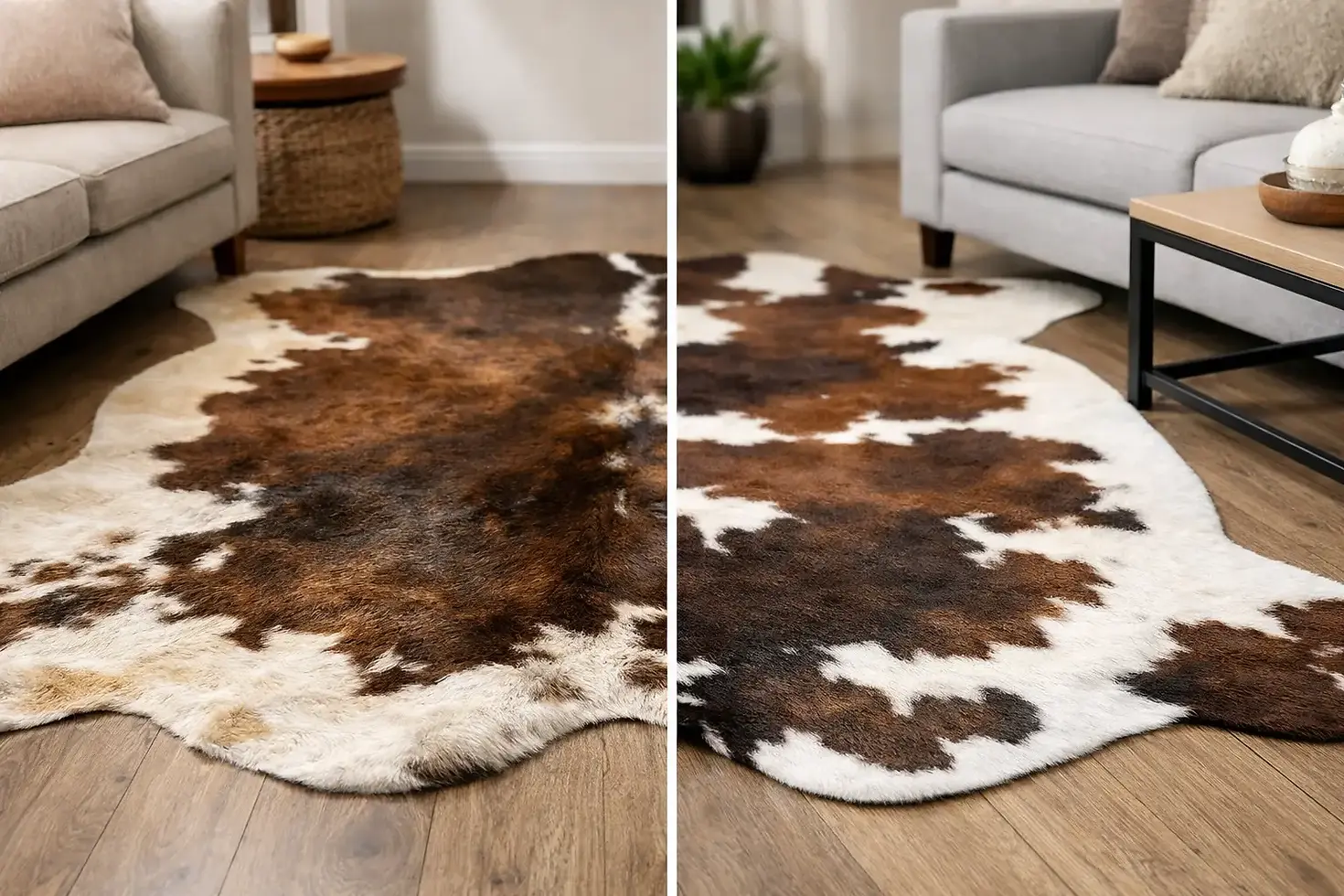
Cowhide Rug Versus Synthetic Hide Compared
A rug can set the whole tone of a room before anyone notices the furniture. In the cowhide rug versus synthetic hide decision, the question is not simply real versus faux. It is whether you want a naturally one-of-a-kind material with rugged character or a uniform, lower-commitment look that is easier to replace. Both have a place, but they create very different kinds of spaces.
For a ranch home, lake house, lodge, office, restaurant, or Texas-inspired living room, an authentic hide brings texture that cannot be printed or manufactured. A synthetic hide can still provide the familiar spotted pattern, especially in a high-traffic room where budget and quick replacement matter most. The right choice comes down to how you live, where the rug will go, and how much authenticity matters to your design.
Cowhide Rug Versus Synthetic Hide at a Glance
An authentic cowhide rug is real leather with natural hair left intact. The markings, color shifts, edges, and grain belong to that individual hide. Some hides have bold black-and-white contrast, some carry rich brindle tones, and others show warm browns, creams, or subtle speckling. No two are exactly alike, which is a major part of their appeal.
Synthetic hide is usually made from polyester, acrylic, or another man-made fiber with a printed or woven cowhide pattern. It may be cut into a hide-like silhouette or made as a standard rectangle. Quality varies widely. A well-made synthetic option can look convincing from across the room, while a thin printed version often looks flat once it is underfoot.
The difference becomes clearer at close range. Real cowhide has natural variation in hair direction, texture, and sheen. It feels substantial and organic. Faux hide tends to repeat its pattern, hold a more consistent pile, and have a fabric or rubberized backing. That consistency may be exactly what a clean-lined, predictable design needs. It just does not carry the same natural presence.
The Style Difference Is More Than a Pattern
A real cowhide rug does more than add a Western motif. It adds a layer of material contrast. Place one over hardwood, stone, concrete, tile, or a simple neutral area rug, and it softens the room without making it feel overdone. It works especially well beside leather seating, reclaimed wood, iron lighting, longhorn skull art, and warm metal finishes.
Because every hide is different, authentic cowhide gives a room a collected look. It feels found rather than selected from a repeating shelf display. That makes it a strong fit for homeowners and designers who want the room to have a story. A striking hide can be the quiet foundation beneath a large statement piece, or it can become the centerpiece itself.
Synthetic hide generally reads as more controlled and decorative. It can be useful when you need a specific colorway, want matching rugs in several rooms, or prefer a more polished look. It also works well in temporary styling, photo sets, and spaces that need the look of cowhide without the investment in genuine leather.
Shape Matters in the Room
A natural cowhide outline is irregular by design. That organic shape can break up a room full of straight furniture lines and rectangular rugs. It is particularly effective layered under a coffee table, angled beside a bed, or spread in front of a fireplace.
Synthetic hides may mimic that shape, but many are more symmetrical. There is nothing wrong with a cleaner outline, especially in a contemporary space. Still, if you are decorating around real wood, stone, horns, or other organic materials, the natural edges of an authentic hide usually look more at home.
Durability Depends on How You Use It
Authentic cowhide is made from leather, a material built to handle real life when it is properly cared for. It is commonly used in active living spaces because the hair is relatively easy to shake out and the hide lies flat with a natural weight. A quality cowhide can hold up beautifully in a living room, office, or bedroom for years.
That does not mean it belongs everywhere. Constant direct sunlight can gradually affect natural color. A wet entryway, a room with frequent muddy boots, or a patio exposed to weather is not the best setting for any hair-on hide. If the rug will live in a hard-use zone with frequent spills, pets, and children coming through every hour, synthetic may offer more peace of mind.
Faux hides can be washable or spot-cleanable depending on the backing and fiber content, but buyers should read the care label closely. Some synthetic materials shed, mat down, or separate from their backing over time. Others retain a plastic-like feel after repeated cleaning. A lower purchase price can make replacement easier, but it can also mean buying the same category of rug again sooner.
Real cowhide has a practical advantage many people do not expect: most everyday dry messes do not sink deeply into the hair. Crumbs, dust, and light debris can often be shaken out or vacuumed gently in the direction of the hair. Small spills should be blotted quickly with a clean, damp cloth, then allowed to air dry. Avoid soaking it, steam cleaning it, or using harsh chemicals.
Cost, Value, and What You Are Paying For
Synthetic hide is usually the lower-cost purchase upfront. That makes sense for a guest room, first apartment, event setup, or a space where you are still testing a design direction. If you need a certain look fast and want a predictable price point, faux hide is a practical option.
A genuine cowhide rug costs more because it is a natural material and every hide is unique. You are paying for its individual markings, leather quality, scale, and the fact that it is not a factory-made repeat. In a finished room, a real hide often carries more visual weight than several smaller accessories. It can make a simple sofa, bed, or dining area feel intentionally styled.
Value also depends on your long-term plan. If you want a piece you can move from one home to the next, layer in different rooms, and build a Western or rustic-luxury interior around, authentic cowhide is often the stronger investment. If you expect to replace the rug after a season or redecorate frequently, synthetic may make more financial sense.
Choose for the Space, Not Just the Photo
Before choosing between real and faux, consider scale. A small hide can disappear beneath oversized furniture, while a larger one can anchor a seating area with confidence. Measure the open floor area and think about where the edges will land. You want the hide to feel intentional, not like an afterthought pushed into the center of the room.
Color should work with the permanent elements already in the space. Black-and-white cowhide brings crisp contrast against pale walls and warm wood. Brown, brindle, and tri-color hides blend beautifully with saddle leather, bronze, walnut, and stone. Lighter hides can brighten a darker room, while a darker hide can ground an airy space.
If authenticity is central to your style, choose a real hide and let its natural markings lead. Good Bones Fort Worth offers authentic cowhide rugs for rooms that need a genuine Texas statement, not a generic printed pattern. If your priority is washability, exact color consistency, or a temporary design solution, synthetic hide can still serve the room well.
Care That Keeps a Hide Looking Its Best
Whether the rug is authentic or synthetic, use a nonslip rug pad underneath it. The pad helps protect flooring, keeps the rug from shifting, and adds a little cushion underfoot. For real cowhide, avoid placing heavy furniture directly on the hide for long periods if you want to preserve its smooth appearance.
Rotate the rug occasionally so foot traffic and sunlight do not concentrate in one spot. Vacuum a real hide with suction only or use a soft brush attachment, moving in the direction of the hair. For synthetic hide, follow the manufacturer’s instructions, since some can be machine washed while others should only be spot cleaned.
A real cowhide rug is not meant to look factory-perfect. Its irregular shape, small natural variations, and changing texture are part of what make it distinctive. Choose the material that suits your daily life, then give it a place where its character can be seen and enjoyed every time you walk into the room.
Comments